



Therapist-Approved Tips for Managing Seasonal Affective Disorder and Boosting Mental Health

It’s normal to feel some winter blues in the darker, colder months of the year. But if these feelings intensify and start interfering with your day-to-day life, you may be experiencing a condition known as Seasonal Affective Disorder (SAD).
If you’re feeling particularly heavy and down this winter, KVC Missouri is here to help. From common misconceptions to the tools our therapists equip their clients with to counteract the effects of SAD and depression, this is what therapists want you to know about mental health in the winter.
Myths and Facts About Seasonal Affective Disorder
There are many assumptions about Seasonal Affective Disorder that may leave you feeling confused if you start feeling low seasonally. Explore a few myths — and what you need to know about the facts.
Myth: SAD only happens in the winter or in colder climates
Fact: SAD can occur (and recur) in any season or climate.
Initially, SAD was directly associated with reduced sun exposure and colder weather. While this is true in many cases, and SAD does tend to happen seasonally, it can happen in warmer seasons like summer, too! The symptoms may vary depending on whether you have winter-pattern SAD or summer-pattern SAD. For example, winter-pattern SAD is often associated with oversleeping and overeating, whereas insomnia and decreased appetite are most common with summer-pattern SAD.

Myth: SAD only affects adults
Fact: SAD can affect anyone.
While slightly less common in youth, SAD still affects anywhere from 1.7% to 5.5% of adolescents ages 9-19. The symptoms of SAD tend to be easier to recognize in adults. Children typically display symptoms of SAD through behavioral issues like tantrums or struggling with bedtime. For teens, one of the biggest signs of SAD is school-related challenges like being late to class and grades dropping.
Myth: If my life is good, I won’t experience SAD
Fact: SAD affects happy people, too.
SAD is a mental health disorder that can occur in any person at any time. It is more common in individuals with other mental health conditions, like depression or bipolar disorder, but can occur in anyone.
Myth: SAD doesn’t hit until after the holidays
Fact: Holidays may contribute to SAD.
Some individuals may ride a “holiday high” and feel low once January comes around. But other people may experience the opposite. KVC therapist Kara Goss explains that for many, the holidays contribute to feelings of depression and isolation when dealing with SAD. “A lot of people have traumas around the holiday season,” she says. “When you have loss, that loss hurts more when the holidays hit.”

The Power of Opposite Action to Counter Symptoms of SAD
If you’re struggling with Seasonal Affective Disorder, one smart strategy to counteract your symptoms is called “opposite action.” This is a Dialectical Behavior Therapy (DBT) technique that our therapists guide clients through when they’re dealing with depression, SAD or other mental health conditions driven by emotional urges.
“A lot of times, when people are dealing with some sort of depressive symptoms, our urges are to isolate and lie in bed all day,” explains Goss. Opposite action is exactly what it sounds like: when you feel an urge that isn’t good for you, do the opposite! Goss gives a few examples.
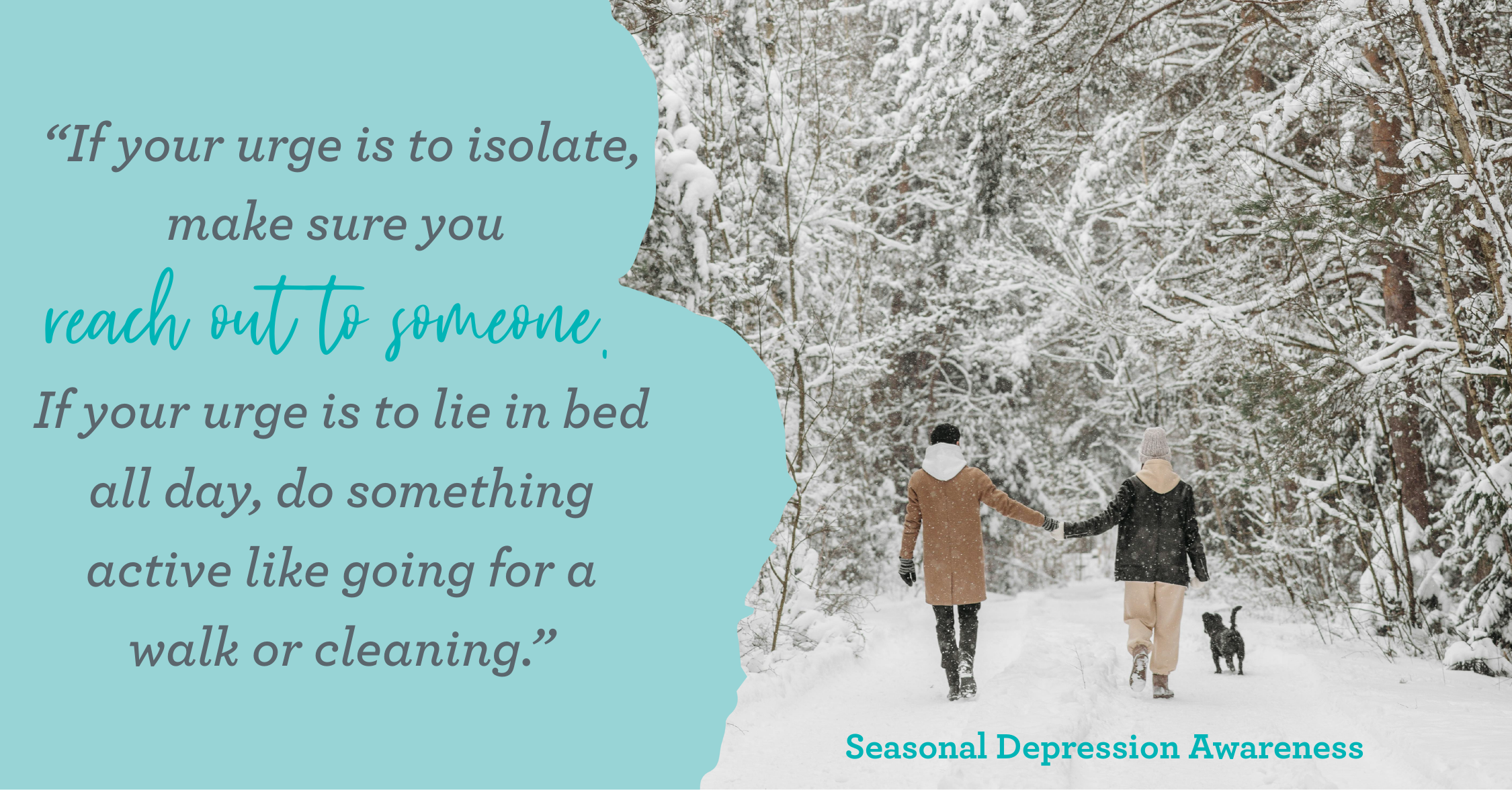
While the opposite action can be powerful for breaking out of depressive patterns, it’s equally important to give yourself grace. Winter is a time when many creatures hibernate and move more slowly, and that’s good for humans, too. If you do the opposite action and still feel like you need rest, give yourself permission to rest.
Brighten Your Days: Realistic Ways to Manage SAD

When you’re experiencing seasonal affective disorder, it can be hard to think of opposite actions or ways to manage those feelings of depression and heaviness. Here are some practical steps you can take to manage SAD and start feeling better.
- Get outside. Vitamin D is a great antidote to SAD. Aim to spend at least 10 minutes outside each day when possible.
- Keep to a routine. Routines are powerful tools for mental health and remove the mental load of decision-making by having your days structured for you.
- Move your body. “If we think too much, then things tend to get more intense and more unpleasant, and we get stuck there,” says Goss. So the key is to get moving. Whether it’s cleaning the house, going for a walk, going to the gym or even just doing a few jumping jacks, moving your body can help get you out of your head.
- Connect with others. Call a family member, get together with a friend or reach out to a support group if you’re feeling alone. Remember, we all need connection.
- Practice mindfulness. Keep a gratitude journal, meditate or do some deep breathing exercises.
- Eat a balanced diet. What you eat can make a big difference! Try incorporating whole foods and foods rich in vitamin D and omega-3s for a mental health boost.
- Limit caffeine. Excessive caffeine can negatively affect your mood and your sleep quality.
When to Reach Out for Help

If you’ve tried managing sadness or low energy on your own and don’t feel like it’s working, professional help can make all the difference in your mental health. While you may be able to manage some winter blues on your own, it may have developed into Seasonal Affective Disorder if your mental health is struggling in one or more of these ways:
- You can’t manage symptoms on your own and feel overwhelmed
- Your go-to coping methods aren’t working like they usually do
- You’re feeling urges to do something unsafe or hurt yourself
- You are struggling to function in your day-to-day life.
You’re Not Alone This Winter

Keep this in mind about Seasonal Affective Disorder: it’s not forever. If you’re struggling with feeling alone, down or depressed, remember that this is just a season, and seasons end. There is a new season around the corner. And in the meantime, there is help.
If you need additional support, no matter the season or the symptoms, reach out to KVC Missouri to learn more about our mental health treatment services.
